How big would you dream if you knew everything about your projects?
Turn project knowledge into actionable intelligence.
Every document, conversation, decision, financial commitment, and milestone can become actionable intelligence. Bring that knowledge together to see your projects more clearly.
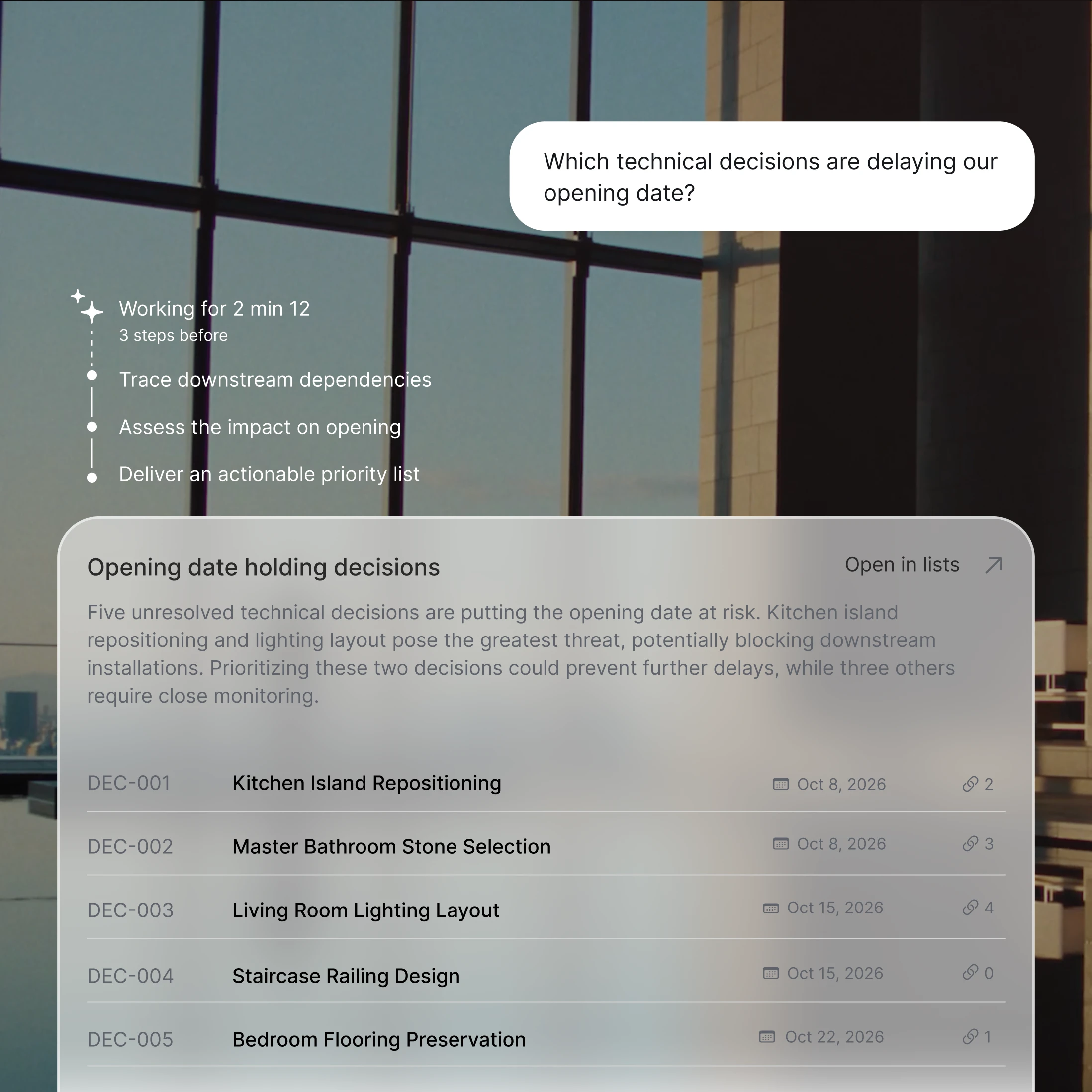
Understand what is holding back your opening date, where your financial exposure is increasing, and what needs your attention. With the context at hand, imagine what you could do next.
Put Agent to work.
Any project insight in minutes not days
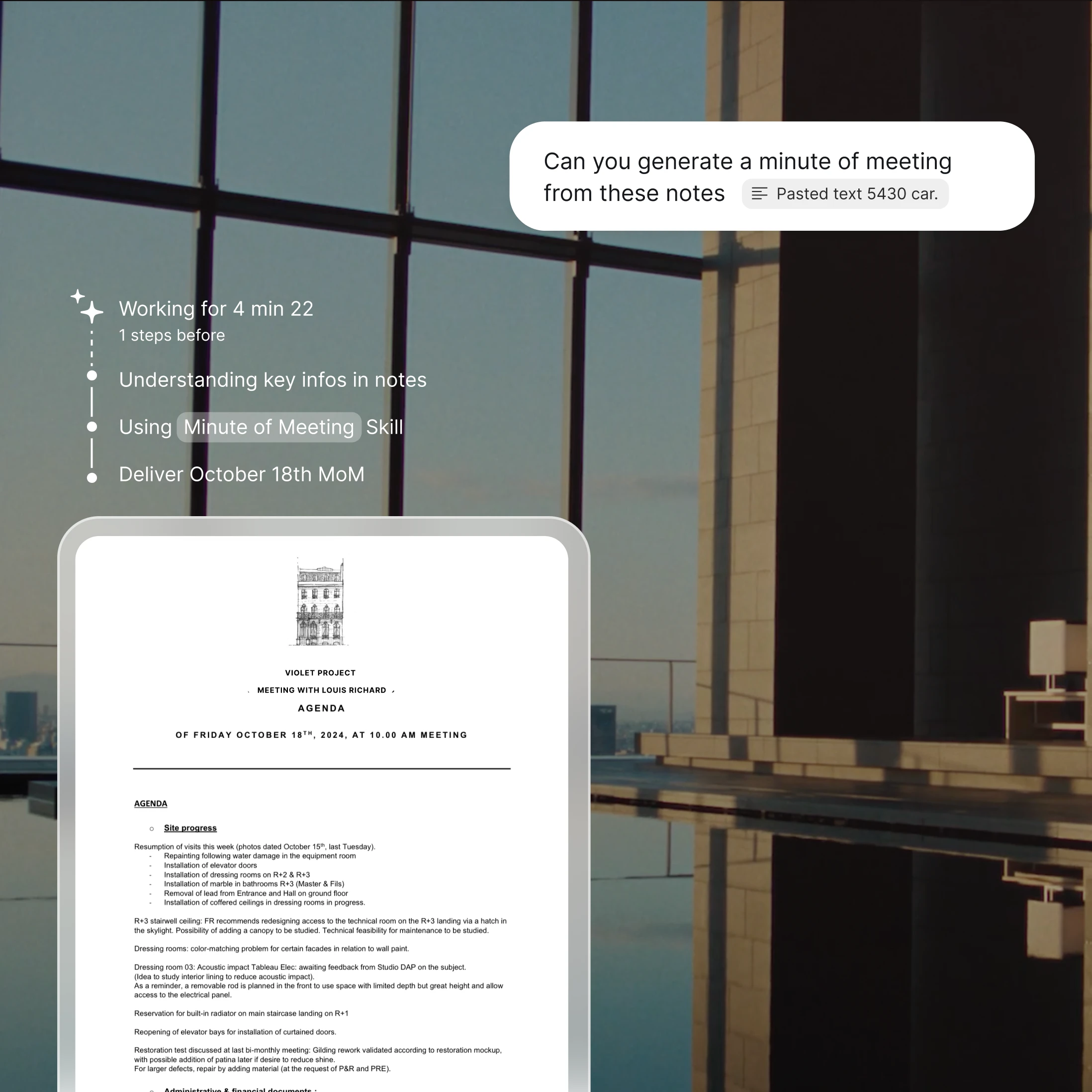
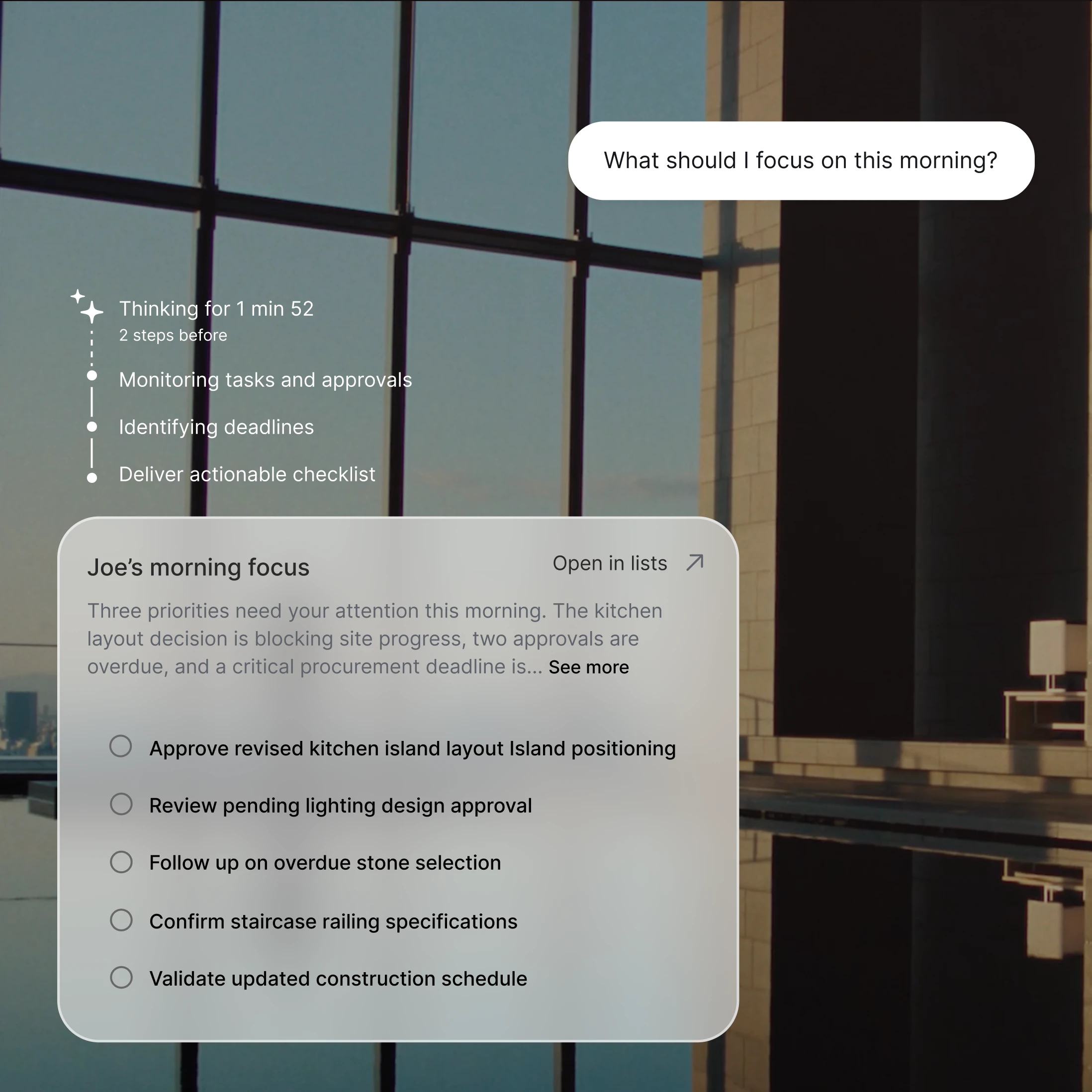
Agent takes an objective, draws on your project knowledge, applies your working methods and prepares analysis, lists and documents your team can use.
THE CAPABILITIES
Leveraging project intelligence to finally get things done
OPUS goes beyond answering questions. Put project intelligence to work through tools, working methods and automation to prepare materials your team can review and use.
of admin, research and document requests covered by OPUS Intelligence
90%90%
Monthly report
Editor
Editor is an AI drafting environment built for project teams. Create reports, briefs and documents using the knowledge and capabilities of the OPUS platform.
Combine the freedom of a spreadsheet with OPUS Project Intelligence. Ask the agent to turn scattered project information into sourced comparisons, working plans and dashboards you can edit and share.
Intelligence is only as powerful as the knowledge and expertise behind it
Your project holds the knowledge. You bring the expertise. OPUS connects both with artificial intelligence, giving every investigation the context to go deeper and every workflow a purpose.
What makes Project Intelligence valuable
50%
Your project context
Every document, conversation and decision. Connected.
30%
Your team’s experience & expertise
Your judgement, methods and standards.
20%
Powerful AI models
The reasoning that puts your knowledge to work.
Brought together by OPUS
100% Project Intelligence
An illustrative mix of what creates value, not a measured attribution. The balance varies by project and task.
Connected to your reality.
Documents, conversations and approvals build a shared project memory. Explore an answer alongside the records and decisions behind it.
Guided by your expertise.
Your priorities give the work direction. Your working instructions bring your methods and standards into the way OPUS investigates and prepares a result.
Ready to move work forward.
Carry the context into a report, a structured list or a workflow. Review the result, refine it with your team and decide what happens next.
Extraordinary intelligence. Measurable impact.
Turn project knowledge into outcomes you can measure, from time saved to clearer decisions and better visibility across your projects.
To answer any question*Enabling real-time data-led decisions*
< 5 min< 5 min
Feel OPUS speeds up risk anticipation
97%97%
Weekly time savings by >50% of OPUS users
+4hrs+4hrs
* Complex questions may take around an hour to analyze. For example: “Across all project contracts, design revisions and procurement schedules, which combination of decisions would protect our opening date at the lowest additional cost, and what risks and trade-offs would each scenario introduce?”
Frequently asked questions
Project Intelligence combines your project record, your team’s expertise and AI to prepare useful work. For example, it can compare a proposed substitution with the approved brief, organise the differences in a list and prepare a decision paper. The quality of that work depends on the evidence available and the criteria you provide.
Start with the records needed to answer your question: relevant documents and revisions, recorded discussions, decisions or financial commitments. Add the objective, review criteria and expected output. You do not need a complete project archive for every task, but conclusions that depend on missing history remain provisional until that history is supplied.
Yes. OPUS prepares sourced analysis that you can examine against the supporting project records. In List, a dedicated source column opens the underlying record and, for documents, the relevant extract. Check the revision, date and approval status as well as the text: a citation makes a finding inspectable, but does not by itself validate the conclusion.
The available record sets the limit of the analysis. Ask for the sources, assumptions and unresolved questions alongside the finding. If a contractor reports completion but the acceptance record is missing, those are two different positions to review. The responsible person must resolve the gap before the result supports an approval or commitment.
Provide the criteria you use to review work, the governing project requirements and the format your reader expects. Agent can apply those instructions when investigating and preparing an output. For a supplier comparison, that could mean checking scope exclusions, delivery evidence and operating requirements rather than ranking offers on price alone.
The authorised people remain responsible for decisions. Agent prepares analysis, List organises findings and Editor helps develop a document your team can review and refine. A recommendation is a working result: technical acceptance, expenditure approval and instructions still follow the project’s agreed responsibilities and review process.
Yes. Agent can prepare sourced analysis, editable lists and documents. Use List for comparisons, calculations or working plans, and Editor for reports and decision papers. Periodic enrichment in List requires configuration and activation. Workflow, which is intended to connect multiple stages into a reusable process, is currently marked as coming soon.
Agree which project records and participants are in scope, then review the data requirements with our team. Document sharing has stakeholder access settings; AI data handling also needs its own review of providers, permitted use, retention and hosting. Use the applicable service documentation to confirm those requirements before introducing sensitive records.
Give your team and projects an advantage with project intelligence.
See how your conversations, documents and decisions come together in OPUS, with a demo shaped around your projects.