Conference
Cityscape Global: Vision 2030 won't be limited by design or capital, but by the knowledge within its projects
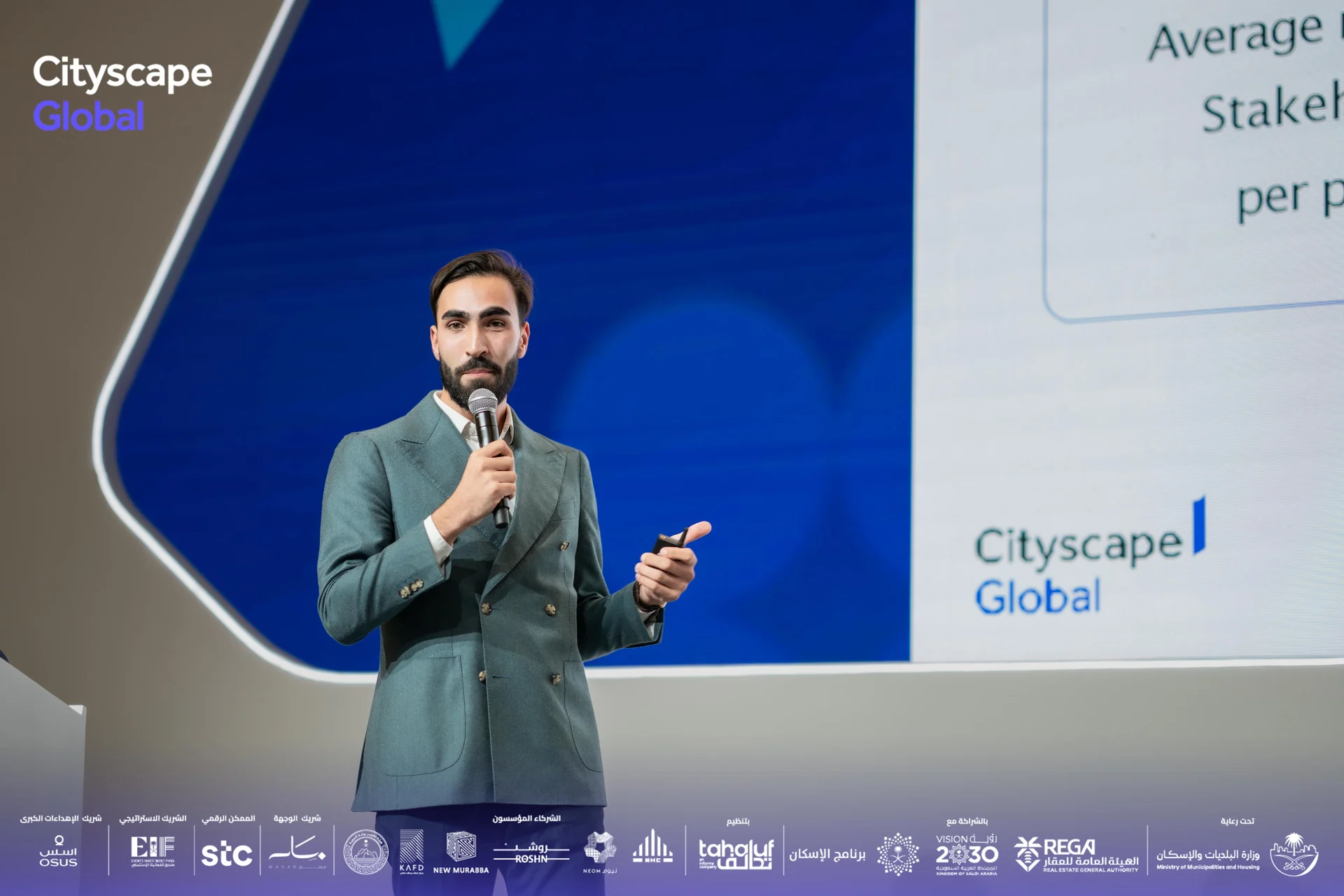
Vision 2030 has the talent and the capital to build what it has imagined. As its projects move into delivery, project knowledge is slowly becoming the decisive factor and potential biggest limiter for its success. It now became clear that Project Intelligence is what will differentiate and power the next generation of ambitious projects. It’s the concept I had the honour of presenting at Cityscape Global 2024, covering the role innovation has to play in the future of Architecture & Construction.
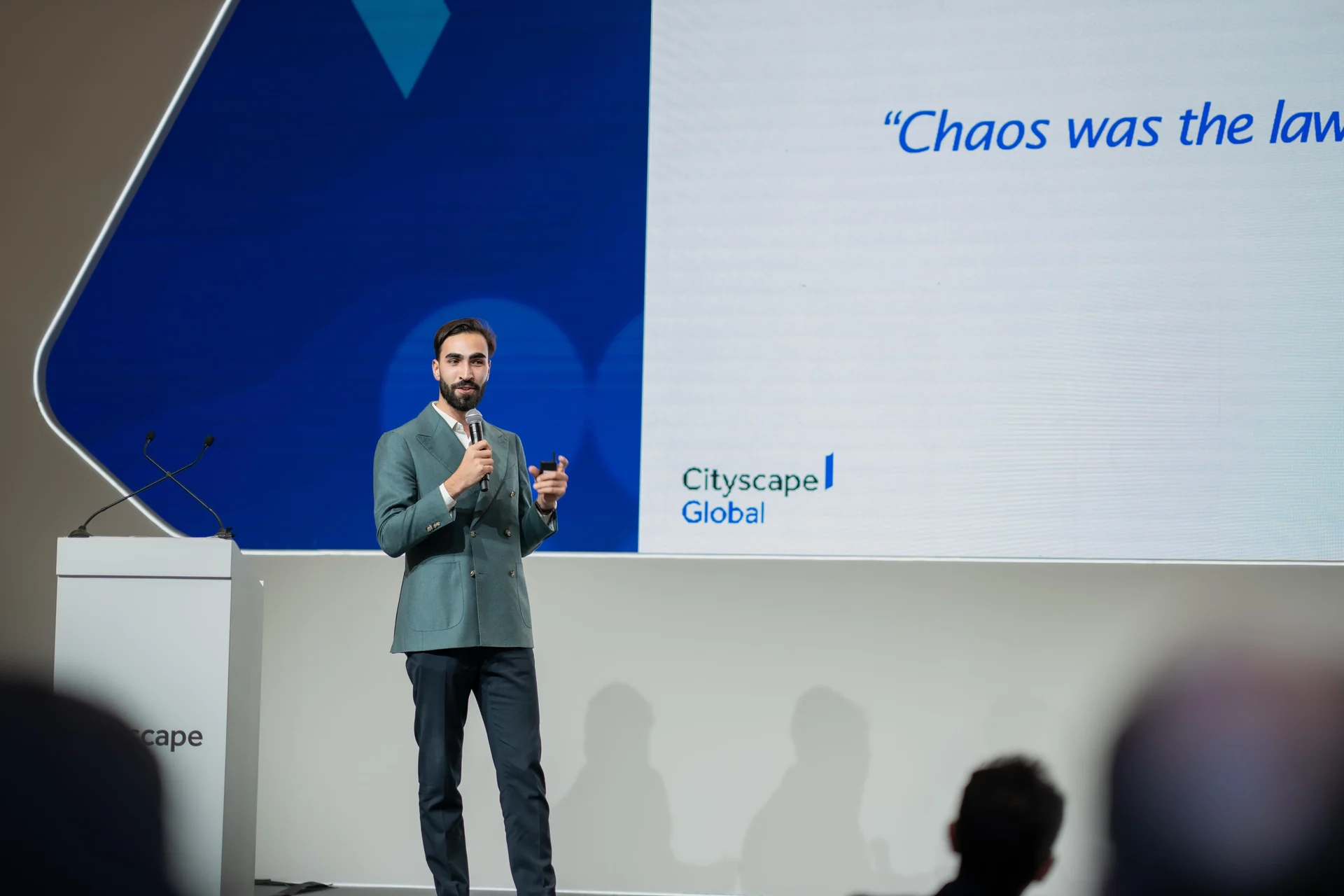
In November 2024, I stood on stage at Cityscape Global in Riyadh and made an argument that, at the time, went against the grain of the conversation around me. Vision 2030 won't be limited by design or capital. It will be limited by the knowledge within its projects.
Two years later, I hold that view more firmly than ever. The programme has moved from plans to delivery, with more than $2 trillion of projects planned or under way across the Kingdom (Knight Frank) and fixed milestones ahead. This is exactly the moment when what a project knowledge start to become a differentiator on the outcome of the project.
This is not a prediction of failure. It is a view on where the next gains will come from, built on over five years working on more than 2,000 projects exceeding over $10 billion in value.
I. The challenges Vision 2030's megaprojects face
Every megaproject in the world faces three challenges: getting the design right, securing the capital, and delivering. Vision 2030 has already answered the first two. On design, the Kingdom has brought together the sharpest minds in the industry, from the world's leading architects and master planners to award-winning engineering firms. On capital, it is investing the funds needed to turn its vision into reality, and sequencing them around its priorities.

Delivery is different. What makes these projects unique is also what makes them hard to deliver. Four specific elements requires our attention.
More stakeholders, from all over the world. A single project above AED 1 billion can involve more than 100 organisations: owners, operators, designers, consultants, contractors and authorities, from dozens of countries, working across languages and time zones. Every additional party is one more interface where meaning can be lost.
More information than anyone can read. The same project can generate more than 5,000,000 pages of documents per month, and a programme of projects, tens of millions. The challenge is no longer finding information. It is selecting the one piece that matters for the decision in front of you.
Decisions that pass through many hands. Tens of thousands of approvals move through a project every month, often across several layers: consultant, project manager, owner's representative, committee. Each layer sees part of the picture, and each adds time between a question and its answer.
Knowledge that erodes as it moves. Each time information moves forward, from design to procurement, from one consultant to the next, from one phase to another, part of its context stays behind: why a choice was made, what was ruled out, what was promised. Over a programme that runs for years, with the turnover that comes with it, that erosion compounds.
None of this reflects a weakness in how the programme is led. It is the natural consequence of building at a scale and speed few nations have attempted. But it means delivery will be decided less by what happens on site than by how knowledge flows between the people who decide. Projects of this size have historically run 20% longer and up to 80% over budget (McKinsey). With most of Vision 2030's projects still under way, now is the moment to address it, while it can still be shaped.
II. Where projects drift: between people
My conviction is simple. Projects rarely go off course because of one dramatic event on site. They drift, a little at a time, every time information changes hands.
To see why, it helps to look at how communication actually works on a project. A large project is not one organisation. It is a temporary coalition of dozens of independent companies, brought together for a few years, each with its own contract, its own systems, its own priorities and often its own language. None of them was built to share a single view of the project.
Information rarely travels directly from the person who knows to the person who decides. It moves through a chain: from a site engineer to a contractor's manager, to a consultant, to the project manager, to the owner's representative, to a committee. At each step it is summarised, filtered and reframed for the next reader. What arrives at the end is accurate in its facts, but thinner in its context.
Most of that communication is also asynchronous. A decision taken in a meeting on Monday is written into minutes on Thursday and reaches the teams who act on it the following week. Documents move through transmittals and inboxes, while the reasoning behind them moves, if at all, through conversations that leave no record. Each party keeps its own version of events, and shares what its contract requires rather than everything it knows.
Scale turns this friction into a structural challenge. The number of possible connections between parties grows far faster than the number of parties: ten organisations can form 45 lines of communication, while a hundred can form nearly 5,000. No team, however capable, can keep every one of those lines aligned through emails and meetings alone.
This is why I see it as a natural consequence, not a failing. Nobody designed project communication to work this way. It is simply what happens when many experts from many organisations build something complex together, at speed. Industry research points the same way: PMI attributes more than half of the budget at risk on projects to ineffective communication (PMI).
Consider a common scene. Last month, the budget for a hotel's lobby fit-out moved. The explanation exists: the interior designer requested a material change, it was approved in a meeting on the 12th, a drawing was revised, and the cost impact followed. But each part of that story sits with a different party, in a different system. By the time it reaches the owner, it arrives as a line on an invoice, not as a decision the owner could still shape.
III. Information is not knowledge
Large projects are not short of information. They are overwhelmed by it.
Every drawing revision, transmittal, request for information, site photo, set of minutes and email adds to the record, and digital tools have made producing information easier than ever. The capacity of any project stakeholder to read, compare and connect it all has not changed. On a project generating more than 500,000 pages of documents, no one can hold the whole picture in mind, and no one is expected to.
The paradox is that more information can mean less clarity. When everything is available, each piece receives less attention, and the signal that matters sits buried among thousands of updates that don't: a delivery date that slipped, an approval that came with conditions, a cost that quietly moved. Teams compensate with summaries and reports, but every summary is a choice about what to leave out, and what gets left out is usually the context.
Past a certain volume, information stops informing and becomes noise. We explore this idea further in You already practice Project Intelligence, which looks at how experienced professionals turn information into insight, and why the answer is not more data but better ways of looking at it.
Knowledge is information placed in context. A drawing becomes knowledge when you know which version it replaced, who requested the change, why, and what it affects. A cost becomes knowledge when you can trace it to the approval and the commitment behind it.
On large projects, that knowledge is held by everyone and owned by no one. Designers, consultants, contractors and operators each hold part of it, in their own inboxes, servers and meeting notes. The owner carries the financial exposure of the whole project, yet holds only a fraction of its knowledge, mostly through reports prepared by others.
When owners bring their project records together for the first time, the same picture tends to appear. The latest documents are easy to find; the reasons behind them are not. Decisions are visible, but the path that led to them is scattered across emails, minutes and messages, often in tools the owner neither controls nor owns.
V. Innovation has gone to the site
Walking the halls at Cityscape, I was struck by how much of the industry's innovation points in one direction. Robotics, drones, prefabrication, sensors, digital twins, smarter scheduling: almost all of it is aimed at the site, at building faster and more precisely.

Very little is aimed at the space between stakeholders, where communication happens and decisions are made. Yet that is where I see the most value being lost. A faster site cannot correct a decision made on the wrong version of a drawing. It only reaches the mistake sooner.
That is why I believe it has never been more important to focus on what happens between stakeholders: how information moves, how decisions are made, and how knowledge is kept. As projects grow larger and faster, the space between people is where the greatest gains remain, and where the least has been done. It is the question that has driven us at OPUS for the past five years.
VI. Knowledge that travels from one project to the next
This is where, in my view, Vision 2030's scale becomes its greatest advantage. The programme will deliver many projects of the same kind: residential communities, hotels, resorts, venues and infrastructure. Each one produces lessons about what was decided, what worked, which risks appeared and when.

Today, most of those lessons leave with the project team. The next project starts again from the drawings, not from the experience. At this scale, that is the largest opportunity I see: knowledge that carries forward compounds from one project to the next.
Leading developers in the region, such as ROSHN, already treat project knowledge as a strategic asset. As more owners follow, the knowledge built across Vision 2030's projects could become one of its most valuable outcomes, alongside the places themselves.
VII. What Project Intelligence changes
Project Intelligence starts from a simple principle: the knowledge within a project should be an asset its owner holds, as valuable as the project itself. It does not replace the expertise of the people on the project. It gives that expertise the knowledge it needs, at the moment it is needed.
Its value is clearest when you set it against the challenges these projects face.
From a hundred versions of the truth to one sourced record. When dozens of organisations each keep their own record, every meeting starts by reconciling them. Project Intelligence brings documents, approvals, costs and decisions into one record the owner controls, each item linked to the exchanges behind it. Parties stop debating which version is current and work from the same one. When a dispute does arise, the answer to "who approved what, on which version, and why" is already there.
From volume to relevance. Half a million pages cannot be read, but they can be organised. By structuring the record and following the questions each decision-maker cares about, Project Intelligence brings forward the few signals that matter, such as the slipped delivery, the conditional approval or the cost that moved, and leaves the rest available but out of the way. Teams spend less of their day searching and checking, and more of it deciding.
From long chains to shorter loops. When information no longer has to pass through every layer before it reaches the person who needs it, the distance between a question and its answer shrinks. An owner sees a change while it is still a request, not once it has become an invoice. Approvals move faster because everyone involved sees the same context.
From eroding knowledge to knowledge that carries forward. Each new piece of information arrives with its author, its version and what it changes, and stays attached to it. When a consultant leaves, a phase closes or the project passes to its operator, the reasoning stays with the project instead of leaving with the people. Because that knowledge is structured, it can also inform the next project: the questions one team learned to ask become the questions the next team starts with.
For the owner, the impact is concrete. Risks surface while they can still be shaped. Reports to investors and boards rest on figures that can be traced back to their source. Accountability becomes clear without becoming adversarial. And project after project, the organisation builds a body of knowledge that makes every next decision better informed.
Applied on live projects, this approach has already helped owners protect more than $484 million in project exposure, and given teams back tens of hours per week otherwise spent searching and checking. At the scale of Vision 2030, the same principle could change not only how each project is delivered, but how much the whole programme learns as it builds.
Not only a Saudi question
Vision 2030 has already answered the hardest questions of ambition: what to build, and how to fund it. What it is now showing the world is how to deliver at a scale few have ever attempted.

The lesson reaches far beyond the Kingdom and the Gulf. Every project owner, whether building a resort on the Red Sea, a district in Abu Dhabi, an office tower in London or a hospital in Paris, faces the same reality at their own scale: the project knows more than they do, and that knowledge is spread across people and organisations they do not control. The Gulf simply shows it at a scale and speed that make it impossible to ignore, and offers some of the best conditions in the world to solve it.
The owners who deliver best in the coming decade will not necessarily be those with the boldest designs or the deepest resources. They will be those who know their own projects best.